Hyperlink in the 18th century
1/3
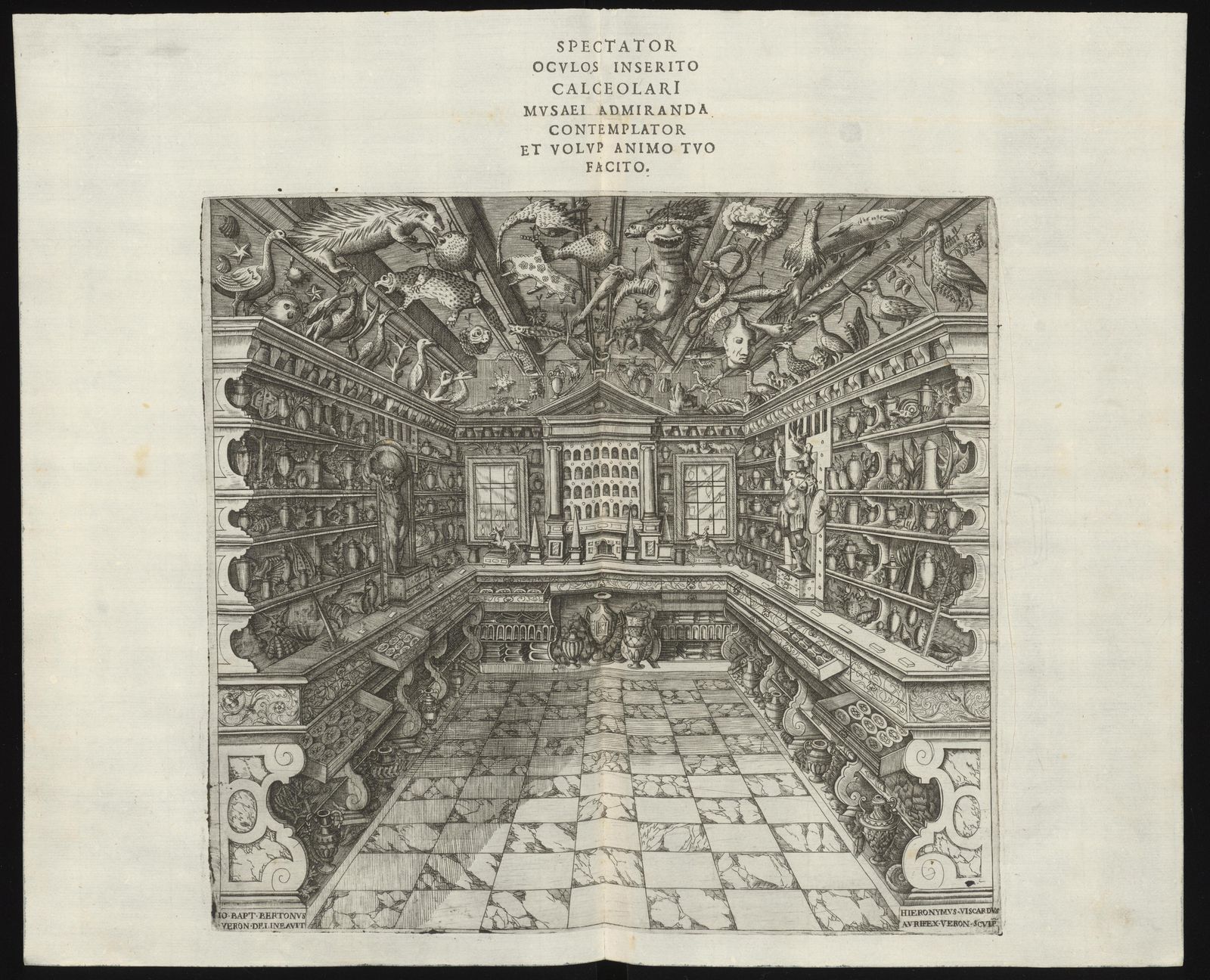
In a chamber of art and curiosities, objects, artefacts, and bodies of knowledge that from today's perspective are totally disparate were deeply intertwined. In addition to paintings, drawings and prints, as well as small sculptures and antiquities, the Faesch Museum also contained extensive holdings of naturalia.
The digital link has its analogue predecessor in the textual reference page.
In order to maintain order in this sprawling cosmos of knowledge, – or even to create order – collectors and researchers used a technique that is widespread today: the link.

2/3
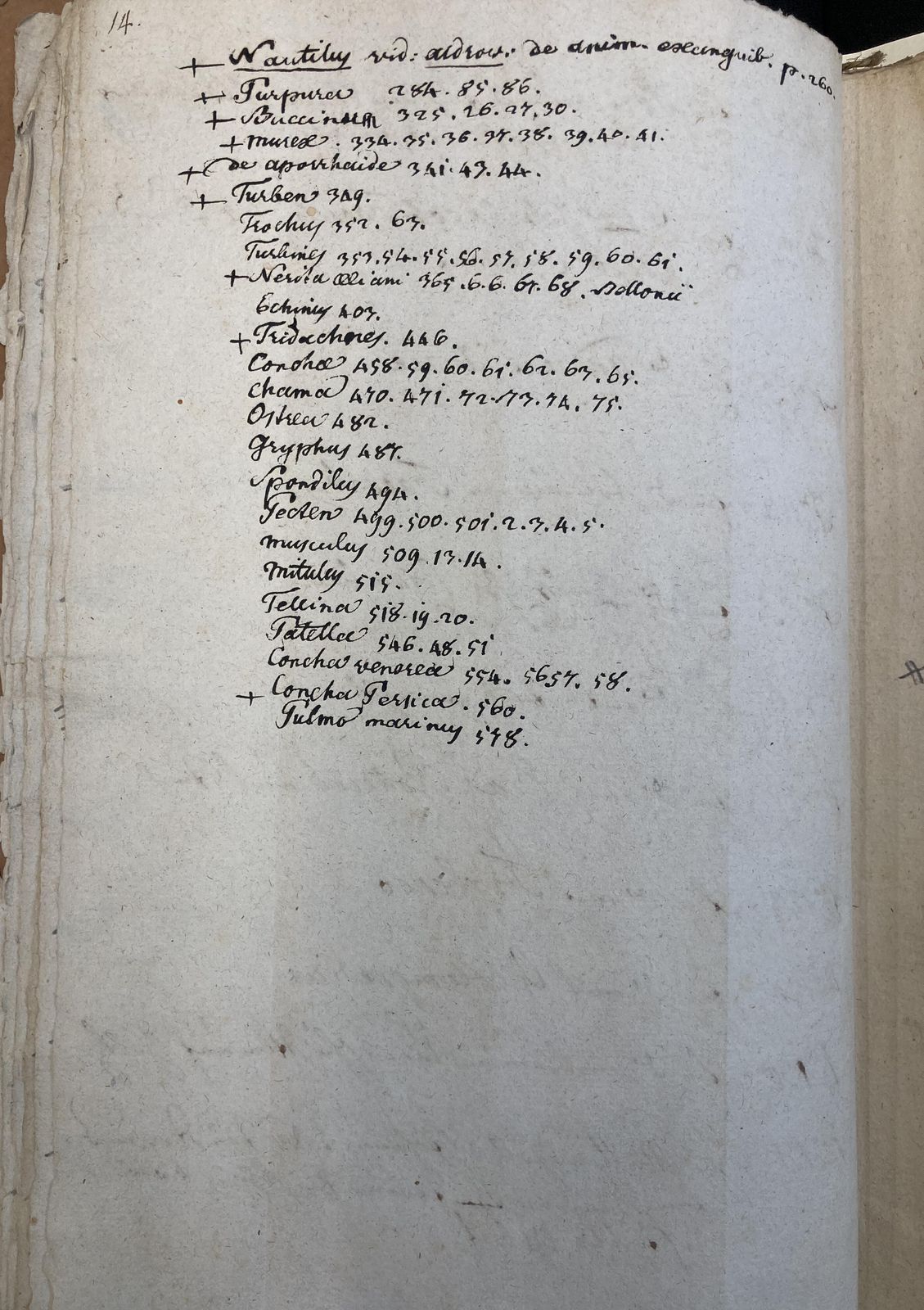
This page from an inventory of 1772 illustrates this well. It lists 24 types of shell molluscs, followed by numbers. The list begins with the nautilus shell (Nautilus) and ends with a sea or ocean lung (Pulmo marinus).
In a sense, the numbers function as links to external content. As is still customary today, the top line contains the corresponding domain: vide: Aldrov[andi]: De anim[alibus] exanguib[us] ("see: Aldrovandi: On the Bloodless Animals").
The numbers thus refer to pages from the work of Ulisse Aldrovandi, who was one of the main authorities on natural history research at the time. The sheet in the inventory thus not only records the holdings of the Faesch shell collection, but also shows how they were used in research: this is a mode of ordering and storage thatbridges autopsy and cross-checking (on the “live” object) with established scholarly knowledge found in books. This made it possible to determine with greater authority the nature of the objects one had in one's own collection; this is why all the links point to pages in Aldrovandi’s work accompanied by their illustrations. This, in turn, pointed to all of the information that could then be accessed there. It goes without saying that Aldrovandi's work was also in the library of Remigius Faesch.
3/3
The entry in the inventory is the meagre remnant of the shell collection in the Faesch Museum. Yet even if the objects have not been preserved, the connection of the objects with the state of research at the time can be reconstructed – and even be vividly encountered thanks to digital links to Aldrovandi's publication. At the same time, the hyperlinks in the inventory show how the collector and researcher Remigius Faesch already made practical use of his museum's holdings.
Of the shells in the Faesch Museum, only the traces of the research practice have been preserved.
The interactive digital copy allows to reenact on your own the linking that Faesch intended with Aldrovandi's book.